Nashville judge rejects one argument for withholding immigration sweep records, but wants another hearing
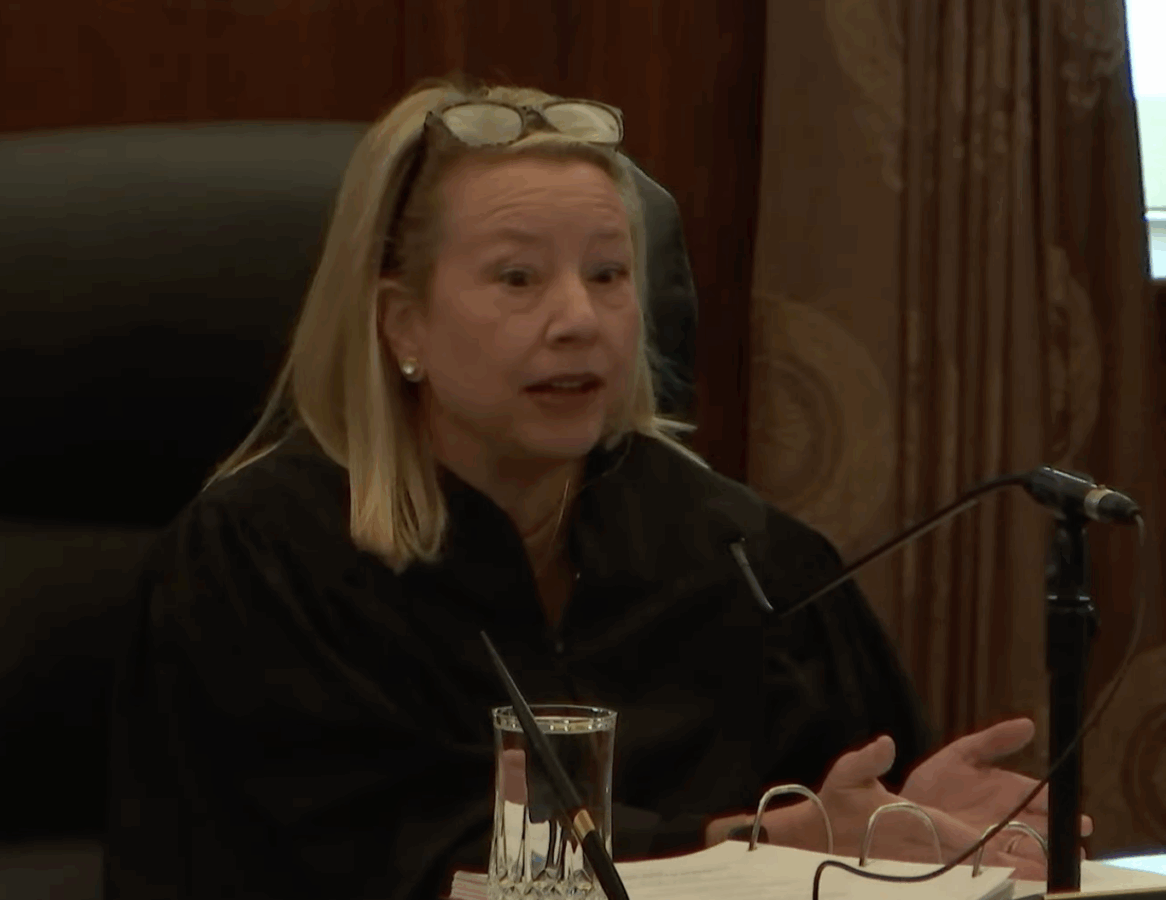
A Davidson County Chancery Court judge rejected the state’s argument that a so-called “anti-hacking” statute could allow the Tennessee Highway Patrol to withhold identities of officers and other information related to this summer’s immigration sweeps in Nashville.
But Chancellor Russell Perkins said an additional hearing will be scheduled to sort out how far another law on “personally identifying information” goes in protecting officer information, writing in his order that he might have to review a sample of unredacted documents in camera to make a final determination.
Perkins said “that redactions of any personal identifying information related to THP officers that were not publicly disclosed during the joint operation or otherwise disclosed generally, should not be publicly disclosed.”
“The fact that material is aggregated in a public records response, however, does not convert previously disclosed information, such as badge numbers, into personal identifying information under Tenn. Code Ann § 10-7-504 (g). The details of this will need to be sorted out in an additional hearing. After this issue is determined, the Court will address any remaining disputes with respect to the scope of redactions designed to protect THP officers…” Perkins wrote in his order released on Friday afternoon.
He also said he would hear additional arguments on whether attorney’s fees should be allowed for the period of time when the Tennessee Highway Patrol was relying on the “anti-hacking” statute to withhold information. The highway patrol asserted the “personally identifying information” exemption only after it was sued.
Records were from joint operation with ICE in May
The order comes in a public records case filed by the Tennessee Immigrant and Refugee Rights Coalition and Michael Holley, the organization’s senior legal counsel, against the Tennessee Department of Safety and Homeland Security (which oversees the highway patrol) and Jeff Long in his capacity as the department’s commissioner.
They sought records from traffic stops, including video footage, that were part of “Operation Flood the Zone,” a joint immigration operation in May in Nashville by state troopers and U.S. Immigration and Customs Enforcement. In all, the state highway patrol reported stopping 588 vehicles on local streets in Davidson County’s Antioch/South neighborhood, producing 103 arrests of people suspected of immigrant violations, according to the court’s order.
The immigration group and its attorney said it had requested public records “in order to shed light on the THP’s dubious efforts to use its state powers to enforce federal civil immigration laws through stops, interrogations, and detentions of motorists on Tennessee roadways.”
Normally, records of such stops are released without redacting names or images of highway patrol officers or other information, such as the reason for the stop.
State argues releasing officer identities could make them ‘targets of violence’
However, the state argued that it had decided not to release information that it thought could identify troopers because it did not want their troopers to become targets of violence.
“The release of identifying information of troopers, or officers across the country, involved in immigration enforcement has led to threats, vandalism, and harassment of the officers and their families,” according to affidavit by THP Col. Matt Perry filed in the case.
“Because of the very real and serious threats to troopers enforcing our immigration laws, the Department does not want their troopers to become targets of violence… Additionally, the Department must protect the integrity and effectiveness of future operations by ensuring that bad actors cannot easily intervene in THP activities. Accordingly the Department decided not to release information identifying troopers involved in the joint operation,” the Perry affidavit said.
The law in question
The state department initially declined to release records by citing Tenn. Code Ann. § 10-7-504(i), which is designed to prevent disclosure of information that would disrupt certain governmental electronic information or systems. Col. Perry’s affidavit stated that release of information might reveal “operational vulnerabilities,” but Perkins found that the state did not meet its burden of proof. “The Court is not convinced that the records requested by Petitioners fall under this exception or present a risk of disclosing potential operational vulnerabilities.”
After the lawsuit was was filed, the state asserted Tenn. Code Ann. §10-7-504 (g), to argue that it could redact personal information that could be used to identify and possibly target law enforcement officers. The statute says:
(g)(1)
(A) (i) All law enforcement personnel information in the possession of any entity or agency in its capacity as an employer, including officers commissioned pursuant to § 49-7-118, shall be open for inspection as provided in § 10-7-503(a), except personal information shall be redacted where there is a reason not to disclose as determined by the chief law enforcement officer or the chief law enforcement officer’s designee.
…
(D) For purposes of this subsection (g), personal information shall include the officer’s residential address, home and personal cellular telephone number; place of employment; name, work address and telephone numbers of the officer’s immediate family; name, location, and telephone number of any educational institution or daycare provider where the officer’s spouse or child is enrolled.
The statute does not specifically mention the names of the officers or their badge numbers, but focuses rather on the officer’s address and phone numbers and the identity of immediate family members.
Nashville Banner’s reviews of THP reports
The Nashville Banner last week produced a story in which it examined 607 incident reports from six nights of the May immigration sting. The news organization reported that more than 600 vehicles were stopped and 196 people arrested. However, the records were highly redacted.
The Banner also reported that only 14 percent of the reports provided a reason for the initial traffic stop. When the reason was cited in the report, it most often was for a “non-moving violation, such as window tints, light laws or improperly displayed tags,” the Banner reported.
The news organization also said information from the reports show that several stops lasted less than a minute.
The immigration group has argued that troopers stopped people based on their race, although the highway patrol has denied this, saying all stops were made based on traffic violations.
About the Author: Deborah Fisher