Bill seeks to create confidentiality for expanded homeland security office
A bill filed this week would exempt records of Tennessee’s Office of Homeland Security while another bill appears to expand the homeland security office’s duties to allow it to conduct “overt and covert investigations” into a new and possibly wider list of things.
Without a public interest exception to the proposed public records exemption, it’s possible that the office could be deployed in more ways than it has in the past with little transparency or accountability that can come through access to public records.
SB1881 / HB1640 would make all investigative records of the office confidential, even after any investigation, prosecution or criminal proceeding is finished. This is unlike the investigative exemption that is exercised by local police which allows records related to an ongoing investigation or prosecution to be confidential, but offers a pathway to transparency after investigations and prosecutions are concluded.
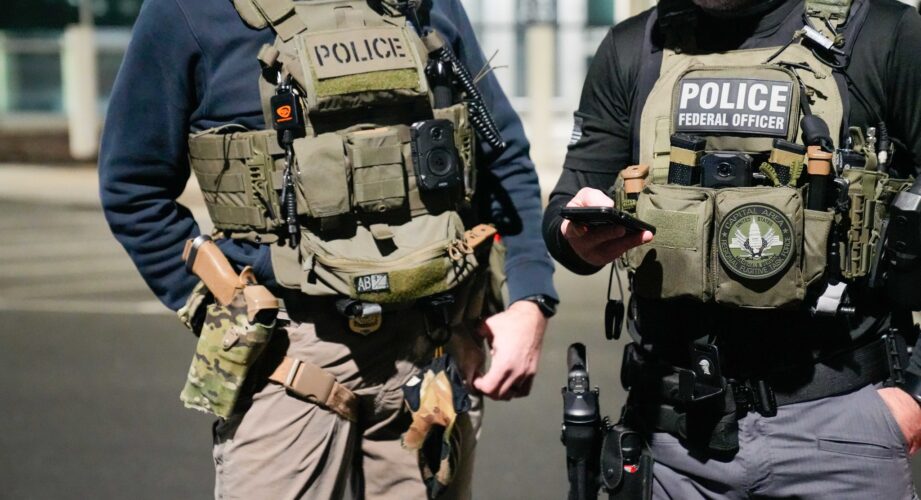
Another bill, SB1880 / HB1639, would create the Office of Homeland Security within the Department of Safety, allowing it to employ commissioned peace officers. The Office of Homeland Security already exists within state government in the Department of Safety, created by executive order in 2003, and has the authority to commission peace officers.
The executive order, signed by then-Gov. Phil Bredesen after the terrorist attacks of Sept. 11, 2001, gave the new office the responsibility of “directing the state’s homeland security activities,” which it said “shall specifically include the duty to design, develop and implement a comprehensive, coordinated strategy to secure the state of Tennessee from terrorist threats and attacks.”
Its website repeats this language, saying the the office has the “primary responsibility and authority for directing statewide activities pertaining to the prevention of and protection from terrorist related events. This responsibility includes the development and implementation of a comprehensive and coordinated strategy to secure the state from terrorist threats and attacks. Further, TOHS serves as a liaison between federal, state and local agencies, as well as the private sector, on matters relating to the security of our state and citizens.”
Expanded authority for Office of Homeland Security
SB1880 / HB1639 establishes the office in Tennessee Code and reworks the authority of the office. In addition to duties of protecting against and responding to “terrorist threats and attacks,” additional duties are specified, which appear to take a broader view of what “homeland security” means.
Specifically, the bill authorizes the office to:
“(5) Conduct overt and covert investigations and provide technical and investigative support into:
(A) Threats or acts of terrorism or suspected terrorism;
(B) Threats to, or attacks on, schools in accordance with § 49-62701;
(C) Threats to, or attacks on, critical infrastructure;
(D) Threats to, or attacks on, public safety;
(E) Threats to, or attacks on, public officials;
(F) Protection of public officials, locations, and events; and
(G) Cyber-attacks and intrusions, cyber misinformation campaigns, and cyber disinformation campaigns;
(6) Administer any funds as may be authorized by the general assembly;
(7) Coordinate policy related to school security according to § 49-6-802 and review school security plans as authorized in § 49-6-4302;
(8) Upon request of the secretary of state’s office, assist with securing the state’s election infrastructure; and
(9) Cooperate and exchange information with other state agencies, other law enforcement agencies, and federal, state, and local law enforcement stakeholders within and outside of this state, through a statewide information and intelligence center to obtain information to prevent, detect, and control crime and apprehend criminals.
In addition, the bill says that:
“Homeland security agents are not prohibited from investigating crimes not specifically referred to in this section. Likewise, other law enforcement agencies are not prohibited from investigating crimes referred to in this section.”
What appears to be new in the enumerated list are “threats to, or attacks on, public officials,” “protection of public officials, locations, and events” and “cyber misinformation campaigns and cyber disinformation campaigns.” It is unknown to me the extent of authority the office currently has for these duties.
The bill also reworks a section of code to reflect the expanded authority by specifying in T.C.A. § 38-3-114 that peace officers commissioned to work for the Office of Homeland Security and make arrests now have the specified investigative authority listed in the bill.
It also includes wording that says every homeland security officer shall “have in the officer’s possession a badge and identification card identifying the officer as a homeland security officer, and the officer shall exhibit the badge and identification card on demand and before making an arrest within a reasonable time.”
Office of Homeland Security currently
The Office of Homeland Security currently has three regional offices in East, Middle and West Tennessee “to assist local officials with planning, training, and conducting exercises; effectively using federal grants; and improving communications,” according to a description in the latest state budget. It also has 11 homeland security districts that provide multi-county responses to chemical, biological, radiological, and nuclear threats. And it works with the Tennessee Bureau of Investigation in operating the Tennessee Fusion Center, “which enhances the state’s ability to analyze terrorism information and improves information sharing among state, local and federal agencies.”
The budget says the office has funding for 156 full-time positions, but does not break out how many of those are peace officers with the power to make arrests, if any.
New exemptions to public records act proposed
The bill that exempts investigative records of the department from inspection under the Tennessee Public Records Act, also exempts all records submitted or created “for protected use regarding the security of critical infrastructure or protected systems, analyses, warnings, interdependency studies, recovery, reconstitution, or for other appropriate purposes.”
It also exempts all records “relating to the identification, analysis, prevention, preemption, disruption, response, maintenance, and defense against and mitigation of terrorist or criminal threats and acts against Tennessee’s critical infrastructure and the homeland” and all records “that are designated by the commissioner of safety or the commissioner’s designee as describing or relating to protected critical infrastructure.”
These exemptions are written quite broadly, exempting records that are simply “relating to” the work of the office in defense against terrorist “or criminal threats” to not just “infrastructure,” but also “the homeland.”
I believe all of this would likely be interpreted to simply make all or most records of the Office of Homeland Security confidential.
About the Author: Deborah Fisher