Appeals Court: Copyright Act does not prevent Nashville police from disclosing Covenant shooter records
The Tennessee Court of Appeals has ruled that the U.S. Copyright Act does not prevent the Metro Nashville police department from disclosing journals and other material created by the Covenant School shooter.
The appeals court also rejected a broad reading by the trial court that “every single item” compiled or created by shooter and collected by police was exempt from the public records law based on a school security exemption, T.C.A. §10-7-504(p), saying it “strains credulity.” The court remanded this issue to the trial court to determine which works were exempt and which were not. “No record in Metro’s file should be deemed exempt ‘simply because it contains some exempt information.'”
The decision reversed two key rulings of Davidson County Chancellor I’Ashea Myles, and instructed Myles on remand to conclude the process of reviewing files for redaction “as expeditiously as possible,” noting that “almost three years have passed since the first request for this information.”
The ruling, if not appealed, could lead to many long-hidden records about the shooter to finally emerge. The ruling on the copyright act also was a win for those who feared that copyright infringement worries could lead to government officials withholding wide swaths of materials.
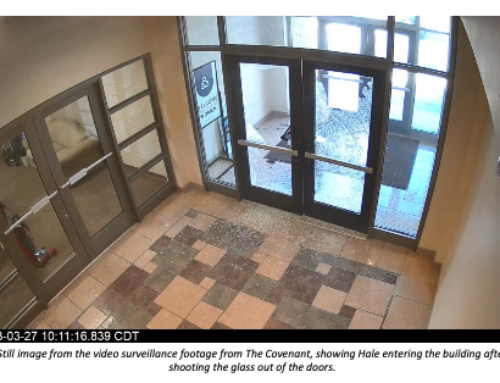
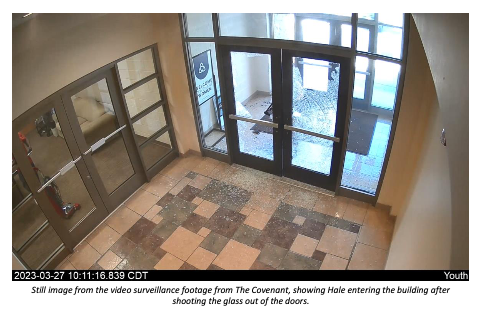
The material created by the shooter and collected by police during its investigation has been at issue since days after the March 27, 2023, attack in which six people were killed, including three children. After requests for material was denied, entities including news media, a senator, a police association and the Tennessee Firearms Association, filed a petition in chancery court to object.
Eventually, the case led to the parents of the students at the Covenant School to claim copyright law as an exception to the Tennessee Public Records Act, seeking to prevent the shooter’s writings from becoming public.
The appeals court said in Brewer v. Metropolitan Government of Nashville and Davidson County that the trial court erred in concluding that the U.S. Copyright Act preempts the Tennessee Public Records Act and prevents the release of the original writings, journals, art, photos and video created by the shooter. (The shooter, Audrey Hale, was killed at the scene by police, and her parents gifted any of Hale’s materials to the parents of the victims).
“Construing the (Tennessee Public Records Act) broadly to promote access to public records, as we are required, we conclude that under these particular circumstances, the only overt action Metro must take to meet its obligation is to allow Petitioners access to the records for personal inspection…
“Whether petitioners choose to go further than that considering their potential copyright liability is left to them. Likewise, if the Parents wish to pursue a copyright infringement action against Petitioners based on how the Petitioners choose to use the information in the records, the (Copyright) Act provides the Parents with a remedy.”
The ruling said that the trial court and the parents “conflate the concept of access for inspection (required under the public records law) with reproduction and display.” The court said the public records law does not require Metro to publicly display its file, but only to to “allow Petitioners access for personal inspection.”
“…Metro may allow access to the records for personal inspection without itself copying, displaying, or publishing the records. This result allows the public to ‘scrutinize [Metro’s] reliance on or consideration of the copyrighted material’…thus furthering the purposes of the (Tennessee Public Records Act.)”
The appeals court recognized that the public records law confers copying rights to members of the public and said “we do not opine whether it is advisable for Petitioners to copy or otherwise reproduce those records upon said personal inspection and access.”
The appeals court did not reverse all of Myles’ rulings. It affirmed that the parents had standing to raise arguments under the U.S. Copyright Act. It also affirmed that the Tennessee Constitution and the Victims’ Bill of Rights did not bar disclosure of the shooter’s writings.
The parents said that the shooter’s writings, if released, would cause them and their children to suffer, which they asserted conflicted with victims constitutional right to “be free from intimidation, harassment and abuse throughout the criminal justice system.”
The appeals court affirmed the trial court’s ruling that the Tennessee Constitution Article 1, § 35 related to victim rights applies to victims while they are involved in the criminal legal system. The appeals court said that both the constitution and T.C.A. § 4-38-102 “makes clear that the rights conferred therein apply to crime victims navigating a criminal case at various stages of a pending or contemplated criminal prosecution.”
“At this juncture, there is neither a legal proceeding nor a police investigation. While the Parents are crime victims in the non-legal sense, they are not victims in the specific context of the laws on which they rely. Moreover, the Parents’ argument is speculative. There is simply no way to prove the future injuries the Parents assert they will suffer should the writings be released.”
The opinion was delivered by Judge Kristi M. Davis and joined by Judge John W. McClarty and Judge Thomas R. Frierson II.
About the Author: Deborah Fisher